Blog

Head of HR Interview Questions Every CEO Should Ask

Effective Head of HR interview questions can help uncover how candidates think, operate, and lead within environments similar to yours. The challenge isn’t just identifying the right questions – it’s evaluating if a candidate actually aligns with your company’s stage, leadership dynamics, and organizational needs.

On paper, many HR leaders look similar. But success in a Head of HR role is highly contextual. A leader who thrives in a large enterprise may struggle in a founder-led company, while a strong builder may not be the right fit for a mature organization needing executive-level optimization and strategy. That’s why the best Head of HR interview questions go far beyond assessing HR knowledge alone.

This guide breaks down the most important interview questions for Head of HR candidates every CEO should ask, what strong answers actually sound like, common red flags to watch for, and how to tailor your evaluation process to your company’s specific needs.

PART 1

Why Most CEOs Misjudge HR Leadership Candidates

One of the biggest challenges in the HR leadership hiring process is that HR leadership is often harder to evaluate than other executive functions. With finance or operations hires, CEOs often have clearer frameworks for evaluating expertise. HR leadership is different because the role changes dramatically depending on:

  • company stage
  • organizational complexity
  • leadership maturity
  • growth trajectory
  • investor expectations
  • culture challenges
  • operational structure


As a result, many companies unintentionally evaluate HR candidates using the wrong signals and over-index on things like big company experience, impressive titles and years of experience.

But those factors alone don’t determine whether someone can operate effectively in your environment. A Head of HR who inherited mature infrastructure may struggle in a business where little structure exists. Likewise, someone who excels at building foundational processes may not be equipped to lead enterprise-wide organizational strategy.

Because of this, the risk usually isn’t asking the wrong Head of HR interview questions. The risk is asking good questions without understanding how to interpret the answers.

PART 2

The Most Important Hiring Question: What Type of Head of HR Does Your Business Actually Need?

Before deciding which questions to ask Head of HR during interview processes, CEOs should first clarify what type of HR leader their business actually requires. Many hiring mistakes happen because companies define the role too broadly.

In reality, there are major differences between builder-oriented HR leaders, scaling-focused HR executives, enterprise HR leaders, transformation-focused HR executives, operational HR leaders, and strategic organizational architects. The right candidate depends heavily on your business situation.

Builder HR Leaders
Builder-oriented HR leaders are often best for companies hiring their first Head of HR. These leaders typically create foundational processes, establish structure, build policies and systems, introduce management consistency, operate in a highly hands-on manner, and prioritize pragmatism over perfection. They tend to thrive in founder-led businesses, early-stage growth companies, and organizations without mature HR infrastructure.

Scaling HR Leaders
Scaling-focused HR leaders are typically strongest in companies experiencing rapid growth. These leaders focus on creating operational consistency, building scalable hiring processes, improving organizational design, developing leadership capability, implementing performance management systems, and reducing operational friction. They are often most effective in companies transitioning from entrepreneurial growth into operational maturity.

Enterprise HR Leaders
Enterprise HR leaders are usually strongest in larger, more mature organizations with established HR teams and infrastructure. These leaders often focus on executive alignment, enterprise-wide people strategy, succession planning, multi-functional leadership, board-level communication, and organizational transformation. A common hiring mistake is bringing an enterprise HR leader into a company that still needs foundational building, operational execution, and hands-on infrastructure development.

PART 3

8 Core Head of HR Interview Question Areas Every CEO Should Cover

The best Head of HR interview questions are designed to reveal how a candidate thinks, prioritizes, leads, and builds trust — not just what HR functions they have managed before. Strong candidates should be able to connect people strategy to business outcomes, diagnose organizational needs, influence senior leaders, build scalable infrastructure, and operate with sound judgment in sensitive situations.

Rather than asking a long list of disconnected questions, CEOs should focus on several core areas that reveal whether a candidate is the right fit for the company’s stage, structure, leadership dynamics, and business priorities.

1. Business Alignment & Strategic Thinking

Ask: “How do you align people strategy with business strategy?”


Optional follow-ups:

  • “What metrics or indicators do you believe leadership teams should monitor related to people strategy?”
  • “Can you share an example of how HR directly impacted business performance?”


Listen for: A strong answer should show that the candidate understands HR as a business function, not just a people function. Look for examples tied to growth, retention, hiring quality, manager effectiveness, workforce planning, organizational alignment, or business performance.


Watch for: Be cautious of answers that focus only on HR programs, engagement language, or generic “best practices” without connecting those efforts to measurable business outcomes.

2. First 90 Days & Organizational Diagnosis

Ask: “What would your first 90 days look like here?”


Optional follow-ups:

  • “How would you decide what to prioritize first?”
  • “How do you balance strategic priorities with the day-to-day operational demands of HR?”


Listen for: Strong candidates should describe a thoughtful diagnostic process before jumping into solutions. They should want to understand the business, leadership expectations, employee experience, current HR infrastructure, risks, and immediate pressure points before deciding what to change.


Watch for: Red flags include overly generic 90-day plans, immediate large-scale change proposals, or answers that suggest the candidate applies the same playbook regardless of company context.

3. Building, Scaling & Operational Maturity

Ask: “How do you decide what HR processes to build versus delay?”


Optional follow-ups:

  • “How have you improved HR operational efficiency while maintaining a strong employee experience?”
  • “How do you determine when HR should build internally versus leverage outside partners or consultants?”


Listen for: Look for practical prioritization, not perfectionism. The right candidate should understand which systems, processes, and policies are most critical based on the company’s stage, risk level, growth plans, and operational capacity.


Watch for: Be cautious of candidates who want to build everything at once, over-engineer HR too early, or default to process-heavy solutions that may slow the business down.

4. Senior Leadership Influence & Credibility

Ask: “Tell me about a time you had to push back on a CEO or senior leadership team.”


Optional follow-ups:

  • “Tell me about a time you had to present a difficult or unpopular recommendation to senior leadership or a board.”
  • “Describe a situation where you had to establish credibility quickly with a new CEO or leadership team.”


Listen for: Strong candidates should show that they can influence senior leaders with clarity, confidence, and sound business reasoning. They should be able to disagree constructively, communicate difficult messages thoughtfully, and build credibility without relying only on title or authority.


Watch for: Red flags include avoiding conflict, escalating too aggressively, struggling to explain their influence approach, or framing HR as either purely supportive or purely oppositional to leadership.

5. Trust, Judgment & Confidentiality

Ask: “Tell me about a time when protecting trust and sensitive information was especially critical.”


Optional follow-ups:

  • “Describe a situation where you had to navigate competing personalities or political dynamics within leadership.”
  • “Tell me about a difficult ethical or judgment call you’ve had to make in your career.”


Listen for: Senior HR leaders often operate in highly sensitive situations involving compensation, performance, investigations, leadership conflict, restructuring, succession, or confidential business decisions. Strong candidates should demonstrate discretion, sound judgment, emotional intelligence, and the ability to balance executive trust with fairness across the organization.


Watch for: Be cautious of candidates who overshare confidential details, speak carelessly about past employers or leaders, avoid accountability, or struggle to explain how they handled competing obligations.

6. Leadership Partnership & Relationship Building

Ask: “How do you build trust with a leadership team?”


Optional follow-ups:

  • “How do you build trust with executives while remaining fair and credible across the organization?”
  • “How would you describe the relationship HR should have with business leaders?”


Listen for: The right Head of HR should be able to operate as a trusted advisor while still maintaining independence, credibility, and organizational perspective. Look for answers that show consistency, business understanding, transparency, follow-through, and the ability to coach leaders through difficult decisions.


Watch for: Red flags include vague relationship-building language, overreliance on being “liked,” lack of examples, or an inability to explain how they balance leadership partnership with employee trust.

7. Team Leadership & Development

Ask: “Describe the strongest HR team you’ve built or led. What made it successful?”


Optional follow-ups:

  • “Tell me about a time you inherited an underdeveloped or struggling team. How did you approach it?”
  • “How do you balance empathy with accountability as a leader?”


Listen for: A strong Head of HR should be able to elevate the HR function, not just personally execute HR work. Listen for examples of coaching, setting expectations, improving team capability, clarifying roles, building accountability, and developing future HR leaders.


Watch for: Be cautious of candidates who focus only on their own accomplishments, avoid discussing team performance issues, or lack a clear philosophy for developing and holding HR team members accountable.

8. Environment Fit

Ask: “What type of organizational environment brings out your best leadership?”


Optional follow-ups:

  • “What are you looking for in your next leadership opportunity?”
  • “What would success look like for you here?”


Listen for: This question helps reveal whether the candidate’s strengths match the company’s real environment. Some HR leaders thrive in high-growth, ambiguous, builder environments. Others are strongest in mature organizations with established teams, complex stakeholder groups, or enterprise-level transformation needs.


Watch for: Red flags include lack of self-awareness, overly broad answers, or a mismatch between the environment the candidate prefers and the environment your business actually offers. The goal is not to find a candidate who gives a perfect answer to every question. The goal is to understand how they think, where they have been most effective, and whether their leadership style, operating model, and experience align with what your business needs now.

PART 4

Questions to Ask During a Head of HR Interview Based on Your Business

The most effective questions to ask a Head of HR during interview processes depend heavily on your company’s environment. The same candidate may be exceptional in one context and completely misaligned in another.

If You’re Hiring Your First Head of HR

When hiring your first Head of HR, you typically need someone who can build structure without creating unnecessary bureaucracy.

Ask:

  • Have you built an HR function from scratch before?
  • What infrastructure do companies usually need first?
  • How do you balance immediate issues with long-term strategy?
  • What HR processes matter most early on?
 

Listen for: Look for pragmatism, hands-on capability and a strong sense of prioritization. The right candidate should be comfortable with ambiguity and able to think like a builder, not just an executive overseeing an already mature function.

Red flags: Be cautious of candidates who depend heavily on large teams, have only operated in enterprise environments or default to overly process-heavy solutions. A lack of adaptability can be especially problematic when the company needs someone to build the function while still responding to immediate business needs.

If Your Company Is Scaling Quickly

Growth-stage companies need HR leaders who can create consistency without slowing momentum.

Ask:

  • How have you scaled hiring while maintaining quality?
  • What leadership challenges emerge during rapid growth?
  • How do you improve manager consistency?
  • What organizational systems become critical as companies scale?
 

Listen for: Strong answers should show pattern recognition, operational thinking and an ability to prioritize what matters most as the company grows. Listen for examples of building scalable systems in fast-moving environments without creating unnecessary friction.

Red flags: Watch for overly process-heavy thinking that could slow growth, limited experience in ambiguous or fast-changing environments or generic answers that lack examples from scaling businesses. Candidates may also struggle if they rely on large teams or mature infrastructure to execute.

If You’re Backed by Private Equity

Private equity-backed businesses often require HR leaders who can operate with urgency, accountability and operational rigor.

Ask:

  • How have you supported businesses under investor pressure?
  • What HR metrics matter most to leadership?
  • How do you align talent strategy with aggressive business goals?
  • How do you manage organizational change during rapid transformation?
 

Listen for: Look for data orientation, business fluency and a clear accountability mindset. Strong candidates should be comfortable operating under pressure and able to connect talent decisions to measurable business priorities.

Red flags: Be cautious of candidates who have difficulty connecting HR initiatives to business outcomes or who show limited comfort with metrics, performance tracking and accountability. Slow, consensus-heavy decision-making, lack of urgency or overly theoretical answers can signal a poor fit for a PE-backed environment.

If Your Business Is Undergoing Organizational Change

Transformation environments require HR leaders who can create alignment during uncertainty.

Ask:

  • Tell me about a significant organizational change you led through.
  • How do you manage leadership misalignment?
  • How do you maintain trust during uncertainty?
  • How do you handle resistance to change?
 

Listen for: Strong candidates should demonstrate communication strength, change leadership and emotional intelligence. Listen for examples of executive influence, calm decision-making and the ability to help leaders navigate uncertainty without losing trust or momentum.

Red flags: Watch for avoidance of difficult conversations, limited experience leading through uncertainty or a rigid leadership style in changing environments. Candidates may also struggle if they cannot influence leaders without formal authority or rely on generic change management language without real examples.

PART 5

How CEOs Should Evaluate Head of HR Candidates

The strongest Head of HR interview questions only work when paired with the right evaluation framework. Here are four areas CEOs should consistently assess during the HR leadership hiring process.

1. Stage Fit

Has this person succeeded in an environment similar to yours? This is often the single biggest predictor of success. A candidate who operated successfully inside a mature Fortune 500 HR structure may struggle in a founder-led company with little infrastructure and constant ambiguity.

Look for relevant organizational complexity, similar business stage experience, adaptability, and the ability to prioritize effectively.

2. Business Context Fit

Do they understand your operational reality? HR leadership requirements differ dramatically across healthcare, manufacturing, private equity, technology, nonprofit, multi-site operations, and founder-led businesses. 

Strong candidates recognize those differences quickly and understand how business context should shape HR priorities.

3. Scope Fit

Can they operate at the level your business actually requires? Many companies unintentionally hire someone who is too senior, too junior, too strategic, or too tactical for the role they actually need.

The best HR leaders balance strategy, execution, operational thinking, and leadership influence. Especially in mid-sized companies, many Heads of HR must operate both strategically and hands-on.

4. Leadership Fit

Can this person effectively partner with your executive team? This often matters more than resume pedigree. 

Strong HR leaders can navigate disagreement productively, influence without authority, communicate clearly, build trust, and maintain credibility under pressure.

PART 6

CHRO Interview Questions: How Executive-Level Evaluation Changes​

While there is overlap, CHRO interview questions should differ from standard Head of HR interview questions. Understanding the differences of each role is key to evaluating candidates against the right expectations. The biggest distinction is that a Head of HR is often a builder and operator while a CHRO is typically an enterprise strategic leader.

A CHRO typically operates at a broader organizational level. This role is often responsible for enterprise-wide organizational strategy, board communication, succession planning, executive team design, enterprise transformation, and global or multi-business-unit leadership.

When evaluating CHRO candidates, CEOs should focus more heavily on executive influence, organizational architecture, enterprise leadership, and long-term strategic thinking.

Valuable CHRO interview questions include:

  • How have you shaped enterprise-wide people strategy?
  • How do you partner with boards and investors?
  • How do you approach executive succession planning?
  • How do you lead organizational transformation at scale?
  • How do you evaluate leadership effectiveness across business units?
PART 7

Common Mistakes CEOs Make During the HR Leadership Hiring Process

Even strong companies make avoidable mistakes when evaluating HR leaders. Some of the most common include:

  • Hiring for pedigree instead of fit: A recognizable employer or title does not guarantee success in your environment.
  • Hiring too senior: Some leaders are highly strategic but struggle in hands-on environments that require execution and building.
  • Hiring too junior: Some candidates can execute tactically but lack executive influence and leadership capability.
  • Treating HR as a support function: Strong HR leadership directly impacts organizational performance, scalability, leadership effectiveness, and retention.
  • Looking for a “perfect” candidate: There is rarely a universally best HR leader—only the right fit for your company’s stage, structure, and goals.


Final thoughts: Hiring an HR leader is rarely just about filling a role. It’s about identifying someone who can operate effectively within the realities of your business. The strongest Head of HR interview questions help surface how candidates think, prioritize, influence, and lead – not just what they’ve done before. And ultimately, the right hire usually isn’t the most impressive candidate on paper. It’s the person best aligned with your company’s environment and future direction.
All HR search. All the time.

Meet Talent Connections

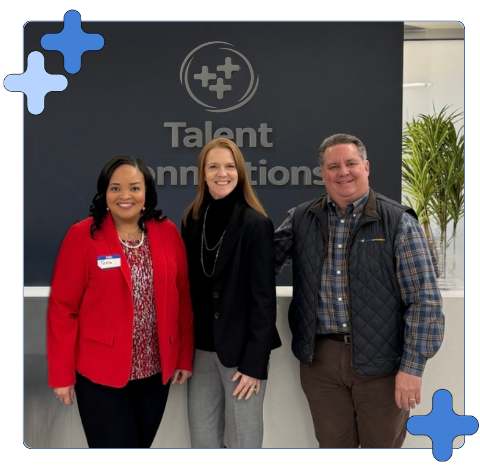
Talent Connections is an HR search firm focused exclusively on HR placements—from Heads of HR to HR business partners. This specialization enables us to deliver what other firms can’t: high-fit, high-quality HR leaders in days, not months.

After 27 years and 2,000+ HR searches, we’re experts at finding HR talent that fits the moment you’re in—not just the role you need to fill. Whether you’re evaluating if it’s time to hire your first Head of HR, defining the role, or ready to start your search, we’re here to help you find HR leaders who are built for your environment.


Strengthening HR Leadership (Twice) to Support Mission-Driven Growth

At Talent Connections, we are passionate about helping mission-driven organizations build the HR leadership needed to expand their impact. When Inspiritus, an Atlanta-based nonprofit, engaged us, they were at a pivotal moment of growth and transformation.

To ensure stability and forward momentum as its long-term HR structure evolved, we partnered with Inspiritus on interim HR leadership support. We then placed their first Head of HR, who brought strategic focus to culture, engagement, and organizational alignment. This leader helped lay the foundation for a more cohesive people strategy– guiding the organization toward a future-of-work model while strengthening employee engagement across a diverse and growing team.

As Inspiritus continued to evolve and elevate its HR strategy, we partnered with them again to place a second key HR leader who was equipped to guide the organization through the next phase: a large-scale transformation and organizational alignment. This leader played a critical role in positioning Inspiritus to expand services across its footprint and ensuring the organization could continue delivering on its mission at an even greater scale.

This partnership reflects our commitment to supporting nonprofit organizations with HR leadership that drives both cultural strength and operational transformation, enabling them to serve more communities and create lasting impact.

Delivering Specialized Talent in a High-Pressure, Competitive Market

Talent Connections specializes in helping organizations solve complex, high-volume hiring challenges, especially when the talent is scarce and the stakes are high. When Microsoft Corporation needed to identify and secure software test engineers across the country, they engaged multiple firms to support the initiative, including Talent Connections.

The objective was clear but challenging: source, qualify, and deliver highly specialized technical talent in a competitive market shaped by rapid innovation and aggressive hiring from peer companies like Google. Speed, precision, and consistency were critical.

To meet this demand, Talent Connections deployed a team of senior-level IT contract recruiters with deep experience in technical sourcing and evaluation. Working as an extension of Microsoft’s internal team, we focused on identifying hard-to-find candidates, rigorously qualifying them, and delivering a strong pipeline of talent ready for consideration.

While other firms struggled to keep pace and ultimately stepped away from the engagement, Talent Connections remained committed and continued to deliver results. Our consistency, quality, and ability to operate under pressure led Microsoft to expand the partnership, inviting us to support additional, experimental recruiting initiatives.

This engagement highlights our ability to execute in demanding environments, delivering specialized talent solutions that help organizations stay competitive—even in the most challenging hiring markets.

Scaling Recruiting Capacity with High-Impact Contract Talent

At Talent Connections, we partner with enterprise organizations to build flexible, high-performing recruiting functions that can scale with business demand. When The Coca-Cola Company needed to significantly increase hiring volume, they faced a critical challenge: how to expand their recruiting capacity without taking on the cost and rigidity of full-time hires.

Initially, Coca-Cola engaged a division of a global retained search firm to source contract recruiters. However, the cost structure mirrored executive search pricing, making it an unsustainable solution for a high-volume hiring need. The team began exploring a more efficient, scalable approach. That’s where Talent Connections came in.

Leveraging our deep bench of experienced contract recruiters, we partnered closely with Coca-Cola’s internal team to deliver talent that not only met the technical requirements of the role but also aligned with the culture and pace of their organization. Our model provided access to high-quality recruiting professionals at a more flexible and cost-effective margin.

The result was a scalable recruiting solution that could adapt to fluctuating hiring needs without compromising on quality. Many of the contract recruiters we placed stayed engaged for over a year, becoming trusted extensions of the internal team and playing a key role in driving high-volume, high-quality hiring outcomes.

This partnership reflects our ability to deliver flexible talent solutions that help large organizations scale efficiently while maintaining the integrity of their hiring process.

Partnering with an Ivy League University to Build a World Class HR Team

At Talent Connections, we know that finding the right HR leaders for top-tier institutions requires a deep understanding of culture, talent, and mission. When Yale University engaged us to lead searches for two critical HR leadership roles, we partnered closely with their Head of HR to identify exceptional talent for the team.

These searches required relocation to Connecticut, and we worked diligently to identify candidates who could not only deliver at the highest level but also thrive within Yale’s distinguished, purpose-driven culture. Through this collaboration, we successfully placed two incredible leaders who have become integral members of the HR team: the Head of Talent Acquisition and the Head of Total Rewards.

Both leaders have assimilated seamlessly into the university’s culture, making meaningful contributions to their teams while advancing their own professional growth. The client expressed strong satisfaction with the partnership, and the placements continue to reflect the impact of strategic HR leadership in the education sector.

This story highlights our ability to deliver transformative HR talent across industries – including higher education – where culture, mission, reputation and excellence matter most.

Partnering with a Prestigious Law Firm to Elevate HR Leadership

At Talent Connections, we understand that high-performing organizations require equally exceptional HR leadership. When King & Spalding engaged us to lead HR management and leadership searches across multiple locations in the U.S., they were seeking talent capable of thriving in a high-performance environment.

We partnered closely with firm leadership to identify top-tier HR leaders who could operate as true strategic partners, supporting a workforce of some of the most accomplished attorneys in the world. This required individuals with the ability to navigate complexity, influence at senior levels, and align people strategy with business performance in a unique and demanding professional services setting.

Through our targeted and thoughtful approach, we successfully placed high-impact HR talent across key markets, strengthening King & Spalding’s ability to support its people, enhance leadership capability, and sustain its reputation for excellence.

This engagement reflects our expertise in delivering HR talent across multiple levels for organizations where the bar is exceptionally high and the impact of getting it right is even higher.

Supporting a C-Suite Leader Through Two Critical Transitions

At Talent Connections, we value long-term partnerships with leaders who trust us to help build and elevate their teams at every stage of growth. One of our most meaningful partnerships reflects this in action: supporting a C-suite HR leader across two organizations – first Aaron’s, then BrandsMart – during pivotal moments of transformation.

We initially partnered with this leader to help strengthen and elevate the HR function within Aaron’s, aligning talent strategy with the evolving needs of the business. Through this work, we helped transition the team toward a more strategic, business-aligned HR model.

Following a major acquisition, this leader stepped into a new role as Chief Operating Officer of the acquired company. As they took on this expanded leadership responsibility, they once again turned to Talent Connections – this time to rebuild and transform the HR team within the new organization.

Together, we led the shift from a transactional HR structure to a true business partner model, placing high-impact HR leaders across field and corporate environments to support the company’s growth and operational goals.

This story reflects our commitment to partnering with exceptional leaders over time, supporting them as they grow, evolve, and continue to build stronger organizations wherever they go.

Identifying the Next HR Leader to Follow a Legacy

At Talent Connections, we know that replacing an exceptional HR leader is about more than filling a role – it’s about honoring a legacy while preparing for the future. When Holder Construction engaged us to lead the search for a successor to their long-tenured Head of HR, a respected leader who had spent 8+ years building a strong foundation, the importance of getting it right was clear.

Rather than making a direct replacement, the company took a thoughtful and strategic approach – seeking a successor who could step in, learn the business, and carry that legacy forward. We partnered closely with the executive team to identify a high-impact HR leader, placing her in the role of Head of Benefits, Compensation & Wellness with a clear path to succession.

When the Head of HR retired, she was immediately promoted to the top role, ensuring continuity, stability, and momentum for the organization. Now, more than eight years later, she continues to build on that legacy – leading with strength, evolving the HR function, and making a lasting impact on the business.

This story reflects our ability to identify and place leaders who not only step into big shoes, but confidently grow into them and elevate what comes next.

Elevating Total Rewards for a Marquee Technology Company

Many times, Talent Connections partners with companies at pivotal moments of growth – when evolving leadership and infrastructure are critical to competing at the next level. When a marquee, household-name technology company engaged us to lead the search for their first Head of Total Rewards, it marked a significant step in their evolution following the appointment of a new CEO.

As the organization scaled toward 1,000+ employees, they recognized the need to transform their rewards strategy – moving from a startup-style, scrappy approach to a more sophisticated, competitive total rewards structure that could attract and retain top talent in a highly competitive tech market.

We partnered closely with their leadership team to identify a top-tier Total Rewards executive, ultimately recruiting a standout leader from one of the most respected companies in the city. This individual brought immediate credibility and the required expertise to lead a comprehensive compensation, benefits, and equity programs transformation.

The impact was felt quickly – enhancing the company’s market confidence, competitiveness, and ability to attract elite talent, while building a scalable rewards infrastructure to support continued growth.

This search highlights our team’s ability to deliver specialized HR leadership that enables companies to scale with intention and compete at the highest levels.

Leading a Transformational CHRO Search for a $4B Global Manufacturing Company

Talent Connections specializes in partnering with executive leadership teams to place HR leaders who can drive business performance at scale. When Lippert engaged us to lead their Chief Human Resources Officer (CHRO) search, the stakes were high, and the opportunity was even greater.

Working in close partnership with CEO Jason Lippert and his executive leadership team, we led a highly strategic search to identify the right leader. Specifically, we set out to find someone who could support Lippert’s continued growth in revenue and market share while also strengthening its deeply purpose-driven, people-first culture. With a footprint spanning 140 global manufacturing facilities and 12,500 employees, this role required a CHRO who could operate at both enterprise scale and human-level impact.

We focused on identifying a leader who could balance operational excellence with cultural stewardship – someone capable of leading a complex, global HR organization while staying true to Lippert’s commitment to supporting employees’ individual and professional goals. Given the significance of the role, relocation was essential, and we successfully delivered a candidate ready to step into this critical leadership position.

This search reflects our ability to partner at the highest levels of an organization to deliver transformative HR leaders who not only meet the moment, but help shape the future of a global, leading business.

Partnering with Private Equity to Ensure a Seamless HR Leadership Transition

At Talent Connections, we understand the unique demands and pace of private equity-backed organizations, where the right leadership is critical to driving performance and value creation. When East West Manufacturing – a global, private equity-owned manufacturing company – needed to hire a new Head of HR, they partnered with us to ensure a seamless and strategic transition.

Their current Head of HR was stepping away on great terms to pursue an entrepreneurial path in consulting, creating an important inflection point for the business. We worked closely with the CEO and the outgoing Head of HR to align on the expectations of a PE environment – speed, scalability, and a sharp focus on business outcomes – while also honoring the strong culture already in place.

Through this highly-collaborative and targeted search, we identified and placed a high-impact HR leader equipped to thrive in a private equity setting. Not only did they quickly integrate and maintain momentum. They also continued to elevate East West Manufacturing’s people strategy in support of growth and value creation.

This engagement highlights our ability to partner with private equity-backed companies and their leadership teams to deliver HR talent that drives results at every stage of the investment lifecycle.

Placing an HR Leader Who Rose to the CEO Role

At Talent Connections, we know that the right HR leader can be a game-changer for an organization. When Georgia Urology needed to hire their first-ever Head of HR, they partnered with us to find an executive who could shape their people strategy and help drive business success.

We identified and placed Dan Fellner – a standout HR leader who quickly became an integral part of the executive team, bringing strategic vision, operational excellence, and a deep commitment to organizational culture. In just six months, following the retirement of the organization’s CEO, Dan was promoted to Chief Executive Officer – a testament to his leadership impact and ability to drive results at the highest level.

This success story highlights the power of strategic HR leadership and reinforces our expertise in placing top talent that not only thrives in their roles, but also transforms organizations from the inside out.

Strengthening Mission-Driven Hiring for Habitat for Humanity International

At Talent Connections, we take pride in helping purpose-driven organizations build high-impact teams. When Habitat for Humanity, one of the most respected nonprofit organizations, needed to outsource their entire recruiting function, they entrusted us with the responsibility of finding top talent to support their mission.

With a focus on both corporate and field roles, we became an extension of their team – delivering skilled professionals who could drive their vision forward. From hiring strategic leaders at headquarters to placing critical roles in the field, we ensured Habitat for Humanity had the right talent in place to support communities worldwide.

This partnership not only reinforced our expertise in nonprofit talent acquisition but also demonstrated our ability to seamlessly manage and elevate an organization’s recruiting function, allowing them to focus on what matters most: Building homes, communities, and hope.

Transforming a National Retailer’s Field HR Team

At Talent Connections, we understand that strong HR leadership is the backbone of a thriving workforce. When Aaron’s newly appointed Chief Human Resources Officer (CHRO) set out to elevate their field HR function, they needed a strategic partner to help build a team that could drive business success at scale.

With a focus on upgrading HR Business Partners and HR Managers across stores and regions nationwide, we worked closely with the CHRO to assess talent needs, identify high-impact HR leaders, and deliver professionals who could enhance employee engagement, strengthen culture, and support operations in a rapidly evolving retail landscape.

Through our targeted and strategic hiring approach, we successfully rebuilt and upgraded Aaron’s field HR function, ensuring the company had the right talent in place to lead their workforce forward. This partnership not only strengthened their HR capability. It also positioned the national retailer for long-term success in an increasingly competitive industry.

Building Strong HR Leadership at Hemophilia of Georgia

At Talent Connections, we take pride in not only placing top talent, but also in fostering meaningful partnerships that support career and leadership growth. Our work with Hemophilia of Georgia is a perfect example of how strategic HR hiring strengthens a purpose-filled organization.

We initially placed Lisa Williams Coleman as Director of HR. She quickly made an impact, leading to her well-earned promotion to VP of HR then to Chief HR Officer. Recognizing the importance of building a strong HR team, she turned to Talent Connections once again – this time, to help her find a critical right-hand leader to serve as her number two.

By understanding the organization’s mission, culture, and evolving needs, we successfully placed a talented HR professional who could seamlessly support Lisa and drive key initiatives forward. This collaboration underscores our commitment to building great HR teams with incredible leaders who trust us to build their teams.

Becoming the Trusted Talent Partner for Cousins Properties

At Talent Connections, we don’t just fill roles – we build lasting partnerships that help great companies thrive. Our relationship with Cousins Properties, a marquee name in commercial real estate, is a perfect example.

Cousins trusted us to place Deborah Schwarz – its pivotal Head of HR who played a critical role in shaping the company’s talent strategy and culture. When she later decided to pursue a consulting career, she departed on great terms – leaving behind a strong HR foundation.

Recognizing the impact of our first placement, Cousins once again turned to Talent Connections to identify their next Head of HR, ensuring continued leadership and stability within their organization. By deeply understanding their culture, goals, and the evolving needs of the business, we successfully placed Francis Wetherington  –another outstanding HR leader who carried their vision forward.

We are proud to be a trusted partner in helping Cousins build and sustain a best-in-class HR function.

Celebrating Marlo Gillette’s 18+ Years of Leadership with Nasco

At Talent Connections, we believe that great companies are built by great people. That’s why we take pride in placing HR leaders who drive lasting impact – leaders like Marlo Gillette, who has been a leader at NASCO for over 18 years.

When NASCO needed a strategic HR leader to help shape its workforce and culture, we connected them with Marlo as an HR Director. Over the years, she has played a key role in strengthening NASCO’s HR function, fostering a people-first culture and driving talent strategies that have fueled the company’s long-term success. Her leadership and vision helped position NASCO as a thriving organization, and today, she serves as Head of HR, leading the charge in building an engaged and high-performing workforce.

Marlo’s journey exemplifies how the right HR leadership can make a lasting difference in an organization’s growth and success. We are honored to have played a part in this partnership and look forward to NASCO’s continued success under her leadership.

Building an Elite HR Team for a Fortune 500 Company’s New Atlanta HQ

At Talent Connections, we specialize in helping companies build best-in-class HR teams, especially during times of transformation. When Veritiv made the strategic move to establish its new headquarters in Atlanta, they needed the right HR talent in place to ensure a smooth transition and long-term success.

With 10+ full-time HR roles to fill – ranging from senior HR Business Partners and Compensation roles to Talent Management and Labor Relations roles, plus a team of contract recruiters – Veritiv turned to Talent Connections for expertise and execution. Leveraging our deep network and market insights, we quickly identified and placed high-impact HR professionals who could support the company’s expansion and growth in Atlanta.

Our ability to deliver quality talent, at speed, across multiple levels ensured Veritiv had the right people in place to drive business success from day one. As Atlanta continues to thrive as a business hub, we take pride in being the go-to partner for companies looking to build exceptional HR teams in this competitive market.

Delivering Hundreds of HR Hires for a Fortune 500 Company

At Talent Connections, we excel at solving complex hiring challenges. When Delta Air Lines needed to scale its HR function rapidly, they turned to our Recruitment Process Outsourcing team to get the job done.

With a nationwide need for 200+ HR professionals, Delta sought a strategic partner who could ensure speed, quality, and efficiency – all of which we delivered. Our dedicated project team executed a streamlined, high-touch recruitment strategy – identifying and placing top HR talent across the country while maintaining the highest standards of excellence.

The result? Every role was filled on time with top-tier candidates who were the right fit for Delta’s culture and goals. This project not only met immediate hiring demands. It also strengthened Delta’s long-term HR infrastructure with exceptional talent.

From high-volume hiring to strategic workforce solutions, Talent Connections is proud to help great companies like Delta build and scale with confidence.

Placing a Growing Healthcare Tech Company’s First Head of HR

At Talent Connections, we thrive on helping organizations build strong leadership foundations. That’s why we were honored to serve Enlace Health in the successful placement of their first Head of HR.

As a growing organization, Enlace Health recognized the need for a strategic HR leader to drive talent initiatives, enhance company culture, and support business growth. Understanding the significance of this inaugural role, our team conducted a targeted search to identify a leader from a progressive health company who could shape and scale the HR function from the ground up.

Our candidate, Amanda Allen, stood out as the perfect fit, bringing a wealth of experience in HR leadership, talent strategy, and organizational development. With her expertise, Enlace Health is well-positioned to cultivate a high-performing workforce and a dynamic, people-first culture.